



This year’s Mid-Autumn Festival and National Day holidays were only three working days apart. So many people took the opportunity to combine them into one long holiday by “taking three days, and getting thirteen off” (请3休13).
60% of travellers went on “cross-province trips” (跨省旅游), looking for something different. Hunan province welcomed more than nine million visitors. Sichuan’s scenic spots took in over four million. And Shanghai received 2.77 million on Mid-Autumn day alone.
But many of those travellers came home with the same complaint. Which was that wherever they went, it felt as if they’d been there before.
One writer describes how they drove from northern Hebei province into the grasslands of Inner Mongolia. The open steppe was everything they had hoped for. But just out of view of their selfies was an unpleasant reality: plastic slides, tired bouncy castles, over-priced horse rides, and pop songs blaring from loudspeakers.
He asks the question:
“China is such a vast country, and yet every destination serves up the same mass-produced tourist experience.”
偌大的中国,走哪儿都是同一条旅游流水线。
Similar complaints from other parts of China flowed on social media feeds.
Hanfu (汉服) costume or “cosplay” rental shops, as well as the ethnic minority equivalents, filled the streets of tourist towns across the country, each churning out streams of customers with the same influencer-style makeup and tacky outfits posing for selfies at “hot spots” (打卡点) in those destinations.
Road signs reading “I miss you in such-and-such a place” (我在XX很想你) are now a familiar sight across China. The first ones went viral a few years ago, and scenic spots across the country have since copied them, and now they seem to be everywhere.
Even the most remote places have been “homogenised” (同质化). One travel blogger driving through the Qilian Mountains (祁连山), which runs along the border of the sparsely populated Gansu and Qinghai provinces, explains how she was confronted by a giant red sign reading “I LOVE 祁连山”, with a gilded European-style pumpkin carriage parked beneath it.
It was a surreal and totally out-of-place nod to Cinderella. Only in China…
Related


A Weibo hashtag asking “How Homogeneous Have Scenic Spots Become?” (现在的景区同质化有多严重) has already racked up tens of millions of reads on the platform over the last couple of weeks. One phenomenon being discussed is the souvenirs on sale at these destinations, with a new phrase coined to describe them:
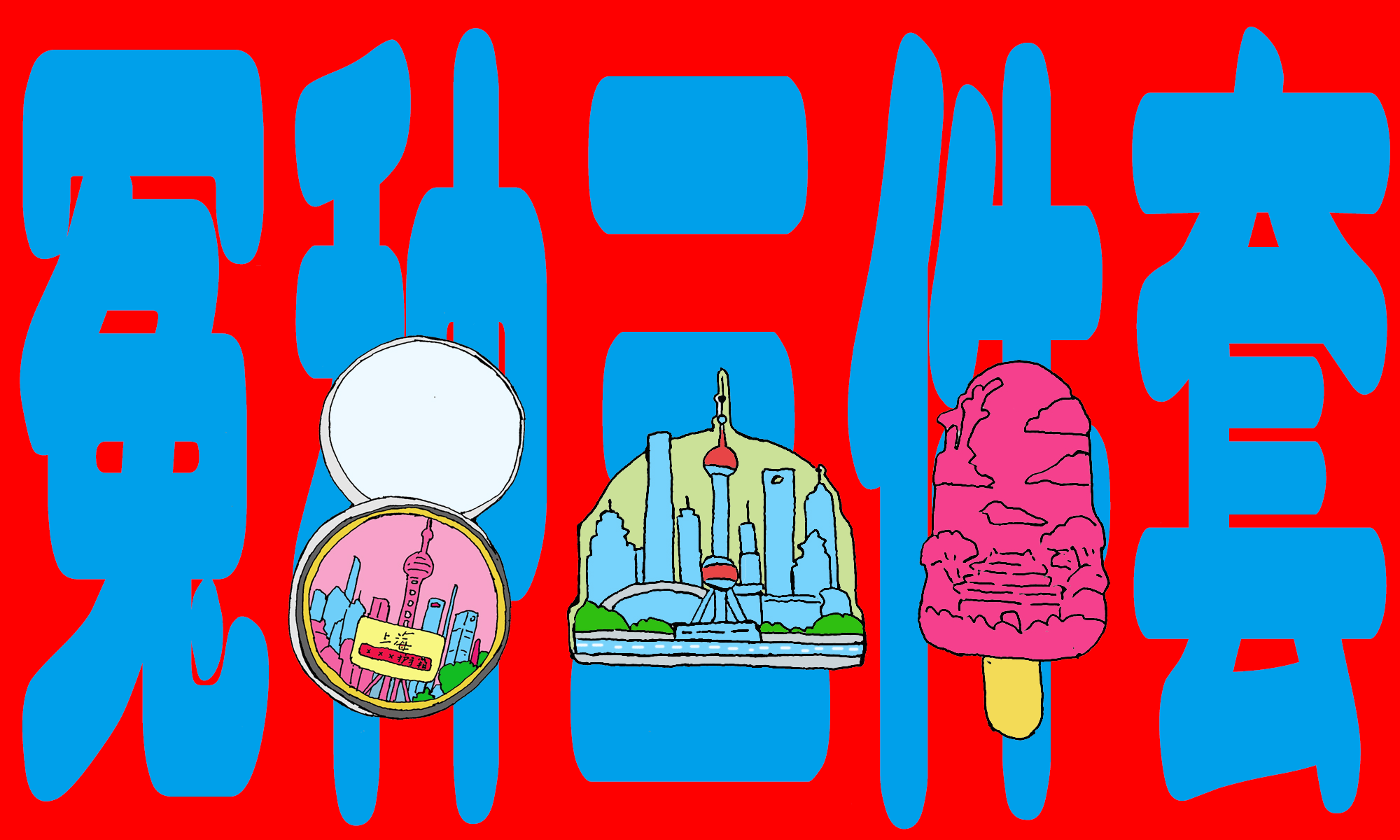
“The most classic of them all is probably the “tourist-trap souvenir trio”:
Hand cream, city fridge magnets and themed ice cream.”
其中最经典的,大概逃不过这“冤种三件套”:护手霜、城市冰箱贴以及文创雪糕。
“Tourist-trap souvenir trio” (冤种三件套) is our translation of a new internet slang expression.
It combines two phrases we’ve learned before in this newsletter: the northern dialect slang, “total sucker” or “gullible victim” (冤种) which describes someone who’s suffered an injustice; and the “three-piece set” (三件套) which has become a popular template online to mock, or self-mock, a group of people, a lifestyle or a predicament. It’s a combination of the three things, always negative, that defines them.
The best known example of this is the “workhorse trio” (牛马三件套) which is a “mortgage” (房贷), a “car loan” (车贷) and “carrying on the family line” (传宗接代). These are the burdens expected of young people in China to shoulder for life. Another common one is the “middle-class poverty trio” (中产返贫三件套) which is having a maxed-out mortgage, a spouse who stays at home full-time, and children who study at international school.
This latest “three-piece set” is made up of three types of so-called “limited edition” (限版) branded souvenirs which seem to be on sale in every tourist destination across China. These are “hand cream” (护手霜), “city fridge magnets” (城市冰箱贴) and “themed ice cream” (文创雪糕) in the shape of local landmarks.
Over-priced and poor quality, the items in this “three-piece set” are probably all produced by the same supplier in Yiwu (义乌). So many tourists have stopped buying this tat and instead they browse, try the samples, take their selfies with the item, and walk away.
In other words, they:
“Only pluck, don’t buy”.
只薅不买。
So that’s what we’re exploring this week! (Read more about this and other online trends in the latest tissue of Eye on Digital China).
Favourite Five
1. 雷同 léi tóng
too similar
这些低端又雷同的设施,不仅没给草原增色,反倒像一块块突兀的补丁 - These cheap and uninspired facilities not only fail to add anything to the grassland, but instead stick out like a sore thumb. [3]
2. NPC
non-player character, mass-produced generic items
除了经典的“三件套”,景区步行街里还有大量“伴手礼NPC” - Aside from the classic souvenir trio, the scenic area’s pedestrian street is also filled with generic gift-shop merch. [1]
Note: The Chinese “NPC” is different to the English equivalent slang, as Zoe explains in the podcast,
3. 盲目跟风 máng mù gēn fēng
mimic others blindly, blindly follow trends
景区的美不只是自然的禀赋,更在于发掘自己的特质,不要盲目跟风 - A scenic spot’s appeal doesn’t just come from the inherent beauty of the landscape, but also from its own unique character, which cannot be acquired by blindly following the trends. [2]
4. 千篇一律 qiān piān yí lǜ
all the same, monotonous
景区也不仅有千篇一律的伴手礼“三件套”,细心发掘总会有一些让人眼前一亮的设计 - Tourist spots don’t just offer the same copy-paste souvenir trio—look a little closer, and you’ll definitely spot a few real gems. [1]
5. 冤种三件套
“sucker” three-piece set, tourist-trap souvenir trio
其中最经典的,大概逃不过这“冤种三件套”:护手霜、城市冰箱贴以及文创雪糕 - The most classic are probably the tourist-trap souvenir trio: hand cream, city fridge magnets, and themed ice cream. [1]
💡 Want to close the gap between your rusty textbook Chinese and the real thing? 💡
The RTM Plus membership will help you do just that.
It gives you the tools, resources, and content you need to get motivated, build a habit, and make real progress.
It including podcasts, app integrations, and much more and is ideal if your Chinese was once strong but has got rusty.
And you want to get your confidence back.
All while staying on top of what people in China are actually talking about right now.
Consuming the Conversation
Useful words
6. 限定 xiàn dìng
limited edition, limited
“限定”两个字精准捕获了游客“来都来了”的消费心理 - The words “limited edition” precisely tap into the consumer mentality of tourists who think, “Since I’m already here, I might as well buy it.” [1]
7. 叫绝 jiào jué
praise enthusiastically, be amazed by
25元一个的清明上河图雪糕凭借哈密瓜草莓味让不少网友叫绝 - At 25 yuan a pop, the Along the River During the Qingming Festival ice cream had netizens raving over its surprisingly good honeydew-strawberry flavour. [1]
8. 颜控 yán kòng
appearance-focused person, someone who cares a lot about looks
雷恩对景区体验有着明确的标准,她坦言自己是“颜控” - For Lei En, it’s all about the aesthetics when it comes to her experience at scenic spots. [2]
9. 不搭 bù dā
not match, look out of place
和这里很不搭,哪怕立一个木质的都可以 - It doesn’t match the surroundings at all; even a wooden one would have worked. [2]
10. 缺位 quē wèi
absence, failure to fulfill one’s role
这些乱象,反映出景区规划在落地执行中的普遍缺位 - These problems reflect the chronic failure to properly implement scenic-area planning. [2]
11. 无脑 wú nǎo
mindless, blindly
这是因为最初的路牌在抖音、小红书走红,导致大量景区无脑复制 - That’s because the original road sign went viral on Douyin and Xiaohongshu, which triggered a wave of mindless copycatting across countless scenic spots. [2]
12. 脱节 tuō jié
be disconnected, be out of sync
景区设计经常出现想法和落地脱节的情况 - Scenic-area landscaping often suffers from a disconnect between ideas and their actual implementation. [2]
13. 出片 chū piān
produce good photos, be photogenic
原本各有风骨的历史名城,生生被改成了统一的 “出片背景板” - Historic cities that once had their own distinctive character have all been turned into photo backdrops. [3]


